
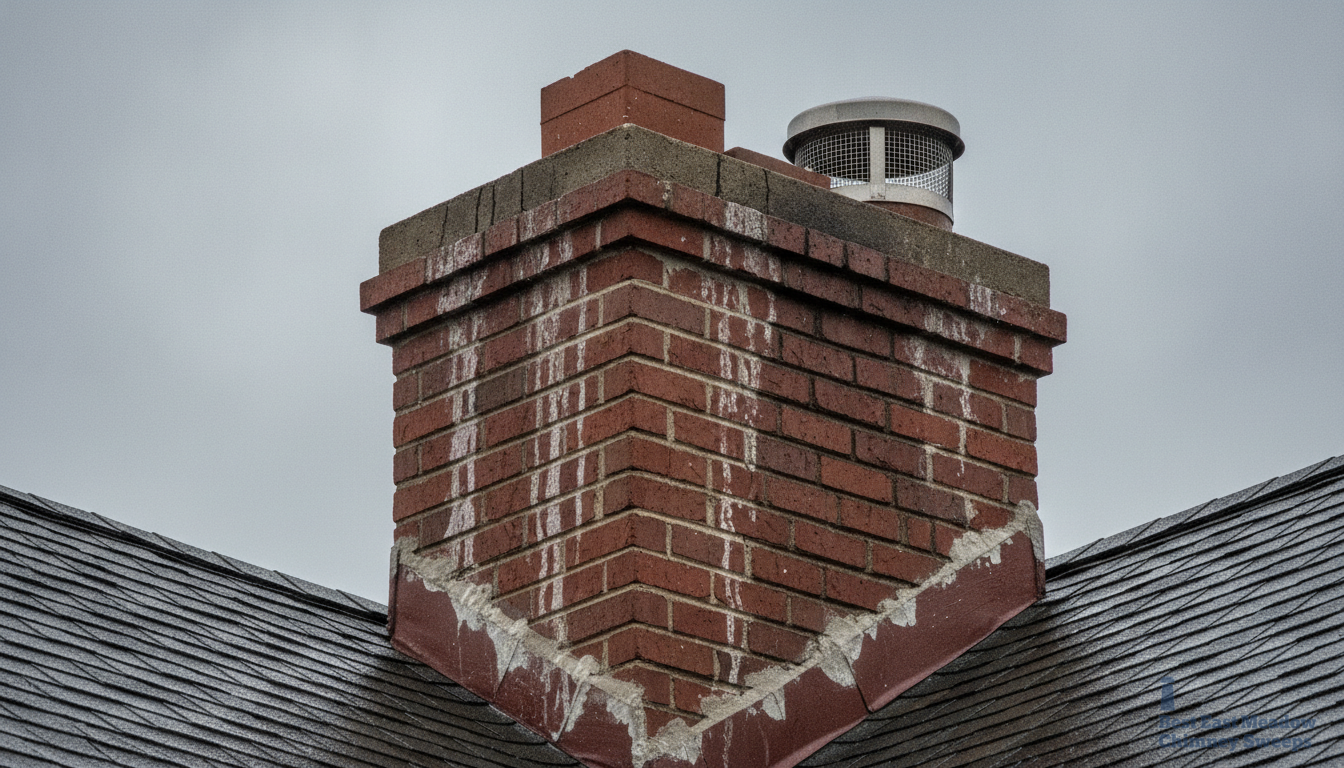
Water Is Your Chimney's Biggest Threat — Not Fire
Most homeowners assume fire is the greatest danger to their chimney. In fact, chimney industry professionals consistently identify water as the leading cause of chimney deterioration and structural damage. Brick and mortar are naturally porous materials. Rain, snow, and even morning dew are absorbed into the masonry surfaces of your chimney every day. In East Meadow, NY — where Atlantic-influenced weather systems deliver heavy precipitation from fall through spring — that moisture exposure is substantial. And when temperatures drop below freezing overnight, that absorbed water expands as it turns to ice, cracking brick faces, fracturing mortar joints, and chipping away at your chimney's structural integrity one freeze-thaw cycle at a time.
The good news is that water damage to a chimney is almost entirely preventable with the right combination of maintenance services. Here's what East Meadow homeowners should have in place before winter arrives.
Step One: Start with a Chimney Inspection
Before any protective treatment or repair can be effective, you need to know the current condition of your chimney. A professional chimney inspection identifies existing cracks, eroded mortar joints, damaged crowns, and compromised flashing — all of which allow water to enter the chimney structure. Applying waterproofing sealer over a cracked crown or deteriorated mortar joints won't stop water intrusion; it simply delays the inevitable while the damage continues underneath.
Our Level 1 inspection examines all accessible exterior and interior chimney components and is included with every chimney cleaning appointment in East Meadow. For homeowners who want a more thorough assessment of the flue liner interior, a Level 2 video inspection is also available and provides a complete picture of your chimney's condition from top to bottom.
Step Two: Repair Any Existing Damage First
Once we know where damage exists, targeted chimney repair work addresses those vulnerabilities before they worsen. The most common water-related repairs we perform for East Meadow and Nassau County homeowners include:
- Tuckpointing — Removing deteriorated mortar from between chimney bricks and replacing it with fresh, high-heat mortar mix. Eroded mortar joints are one of the most common entry points for water in older Long Island chimneys. If you notice white staining (called efflorescence) on your chimney exterior, crumbling mortar, or visible gaps in the joints from the ground, tuckpointing is likely overdue.
- Chimney crown repair — The chimney crown is the concrete or mortar cap that seals the top of the chimney structure, surrounding the flue opening. Cracks in the crown funnel rainwater directly into the masonry below. We repair damaged crowns with reinforced concrete mix or apply an elastomeric crown coat sealant for crowns with minor surface cracking.
- Flashing repair — The metal flashing where your chimney meets the roofline is another common water entry point. Poorly sealed or corroded flashing allows water to run directly into the attic and wall cavity adjacent to the chimney, leading to mold, rot, and interior water stains.
Homeowners in Levittown and across Nassau County with mid-century homes frequently need tuckpointing and crown repair on original chimneys that have never been maintained. The freeze-thaw cycles of 60-plus Long Island winters take a real toll on unreinforced mortar and crowns.
Step Three: Install a Chimney Cap
The simplest and most direct way to keep rain out of your flue is to cap the opening. A properly fitted chimney cap prevents rain from falling directly into the flue, stops wildlife from nesting inside, and keeps windblown leaves and debris from accumulating and blocking exhaust flow. Without a cap, rain water hitting the interior of the flue accelerates liner deterioration and keeps the interior masonry perpetually damp — exactly the conditions that accelerate freeze-thaw damage from the inside out.
We install stainless steel and copper chimney caps sized precisely to your flue opening — whether you have a single clay tile liner, a multi-flue masonry chimney, or a prefabricated chase with a flat top cover. Installation is completed in a single visit, and while our technician is on the roof, they'll visually inspect the crown and surrounding flashing for any issues that need attention.
Homeowners in Hicksville and Westbury often combine chimney cap installation with our other protective services as a complete exterior moisture defense package. It's an efficient and cost-effective approach to scheduling.
Step Four: Apply a Professional Chimney Waterproofing Treatment
After repairs are complete and a cap is in place, the final layer of protection is a professional chimney waterproofing treatment applied to the exterior masonry surfaces. This step stops liquid water from being absorbed through the brick and mortar faces — the slow, invisible form of water intrusion that causes the most long-term structural damage.
It's important to note that not all masonry sealers are appropriate for chimneys. Hardware-store sealers often form a surface film that traps moisture inside the masonry, making freeze-thaw damage worse rather than better. The professional-grade sealers we use are vapor-permeable — they block liquid water from entering from outside while still allowing internally generated moisture vapor to escape. This is critical for an active chimney where combustion produces significant moisture that must be able to exit through the masonry.
A professional waterproofing treatment typically lasts up to 10 years before reapplication is recommended and is one of the most cost-effective preventive investments a Long Island homeowner can make in their chimney's longevity.
What Happens If Water Damage Goes Unaddressed?
Homeowners who skip chimney maintenance often discover the true cost of water damage only after it has progressed to a serious level. Unchecked water intrusion into a chimney can lead to:
- Cracked or collapsed clay tile flue liner sections requiring full chimney liner installation
- Spalling brick faces that require partial or full chimney rebuilding
- Rusted damper assemblies and fireplace components
- Interior water stains on ceilings and walls adjacent to the chimney
- Wood rot and mold growth in attic framing around the chimney
- Deteriorated chimney flashing leading to roof leaks
Every one of those outcomes is significantly more expensive to address than the preventive services that could have avoided them in the first place. Annual chimney maintenance — inspection, cleaning, and targeted repairs — is always the more economical choice.
Serving East Meadow and Surrounding Nassau County Communities
Best East Meadow Chimney Sweeps provides the full range of chimney moisture protection services to homeowners throughout East Meadow and the surrounding communities of Nassau County, including Garden City, Uniondale, Levittown, Hicksville, and Westbury. We're available Monday through Sunday, 8:00 AM to 6:00 PM, so you can schedule service at a time that's convenient for your household.
Don't wait until you see water stains on your ceiling or crumbling brickwork on your chimney exterior. Call Best East Meadow Chimney Sweeps at (516) 588-8755 or email [email protected] to schedule a chimney inspection and get a complete picture of where your chimney stands heading into winter.