
The Hidden Danger Inside Your Chimney
Every time you light a fire in your East Meadow home, burning wood releases smoke, water vapor, and volatile gases that travel up your flue. As those gases cool against the interior walls of your chimney, they condense and deposit creosote — a tar-like, highly flammable substance that builds up layer by layer with every fire you burn. According to the Chimney Safety Institute of America (CSIA), creosote buildup is the leading cause of chimney fires in the United States, and the National Fire Protection Association (NFPA 211) recommends that every chimney be inspected and cleaned at least once per year to keep this hazard in check.
Here in East Meadow, NY, where winters are long and fireplaces get heavy use from October through March, the need for regular professional cleaning is even more critical. Best East Meadow Chimney Sweeps makes it easy with flexible scheduling seven days a week, from 8:00 AM to 6:00 PM.
What Happens During a Professional Chimney Sweep
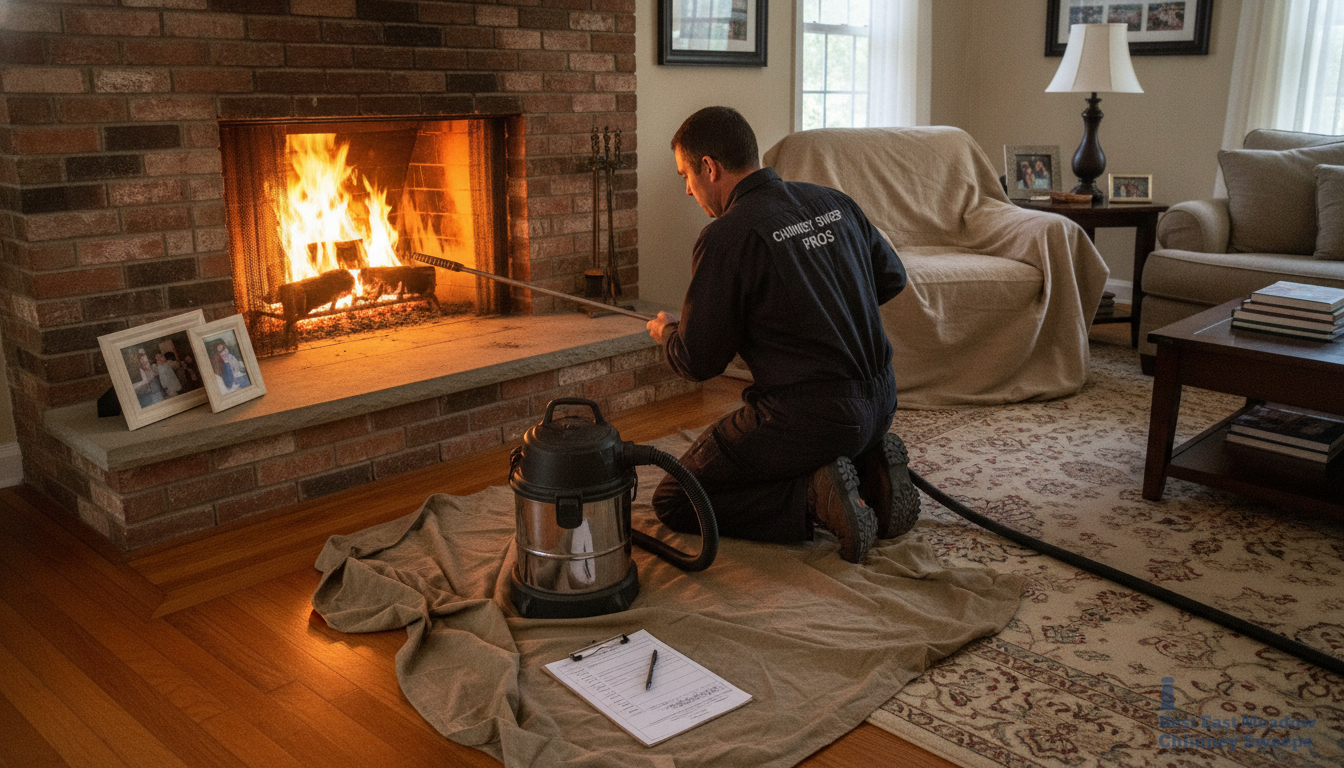
A professional chimney sweep and cleaning is far more comprehensive than what a homeowner can accomplish with a hardware-store brush kit. Our certified technicians arrive with:
- Industry-standard rotary chimney brushes and flexible fiberglass rods sized to your exact flue diameter
- Commercial-grade HEPA vacuum systems that capture soot and debris at the source — keeping your living room clean throughout the job
- Drop cloths and protective coverings to safeguard your hearth and surrounding flooring
- Inspection tools to assess the firebox, damper, smoke chamber, and exterior crown during the same visit
We clean the full system — flue liner, smoke chamber, firebox, and damper — and pair every cleaning appointment with a Level 1 chimney inspection so you know exactly what condition your chimney is in before the next burning season begins. If our inspection reveals any damage, we'll discuss chimney repair options with you right away so nothing is left unaddressed.
Three Stages of Creosote — and Why Stage Three Is Dangerous
Not all creosote is the same. Chimney professionals recognize three distinct stages of buildup, each progressively more dangerous and more difficult to remove:
- Stage One: Dry, flaky deposits that brush away easily during a standard cleaning. This is the ideal stage to catch creosote before it advances.
- Stage Two: Tar-like, crunchy deposits that require specialized rotary tools to remove. More buildup has occurred, but it's still manageable with professional equipment.
- Stage Three: A thick, glazed coating that essentially coats the interior of the flue like a layer of lacquer. Stage-three creosote requires chemical treatments and specialized tools — and in some cases signals that a chimney liner installation may be necessary if the flue has been damaged.
Catching creosote at Stage One through annual cleaning is the easiest — and least expensive — outcome for any homeowner. The longer you wait between cleanings, the more buildup progresses and the greater your chimney fire risk becomes.
Chimney Fires: Fast, Violent, and Often Invisible
Many homeowners assume they would know if their chimney caught fire. In reality, chimney fires often burn fast and hot inside the flue without visible flames or obvious signs inside the home. A chimney fire can reach temperatures exceeding 2,000°F — hot enough to crack clay tile liners, damage mortar joints, and even ignite surrounding wood framing. Some homeowners only discover they've had a chimney fire during a subsequent chimney inspection that reveals cracked liner sections and spalled brick.
The good news: chimney fires are almost entirely preventable. Annual sweeping removes the creosote fuel source before it can ignite.
Carbon Monoxide: The Silent Risk of a Dirty Chimney
Creosote isn't the only threat. A chimney clogged with debris, animal nests, or excessive soot deposits can restrict the exhaust flow your fireplace depends on to safely vent combustion gases out of your home. When exhaust can't exit efficiently, carbon monoxide — an odorless, colorless gas — can back-draft into your living space. This makes chimney maintenance not just a fire-prevention issue, but a carbon monoxide safety issue as well.
East Meadow's suburban landscape means squirrels, raccoons, and birds are common visitors to uncapped chimneys. Installing a chimney cap after your cleaning is one of the most effective ways to prevent wildlife from nesting in your flue between service visits.
Serving East Meadow and All of Nassau County
Best East Meadow Chimney Sweeps serves homeowners throughout East Meadow and the surrounding Nassau County communities, including Uniondale, Levittown, Westbury, Hicksville, and Garden City. No matter where you are on Long Island, we offer the same thorough cleaning process and honest inspection reporting that East Meadow families have come to rely on.
Ready to schedule your annual chimney sweep? Call us at (516) 588-8755 or email [email protected]. We're available Monday through Sunday, 8:00 AM to 6:00 PM, and we make scheduling easy so your chimney is clean and inspected before the first cold night of the season.